
Can You Visit the Colosseum, Roman Forum and Palatine Hill in One Day?
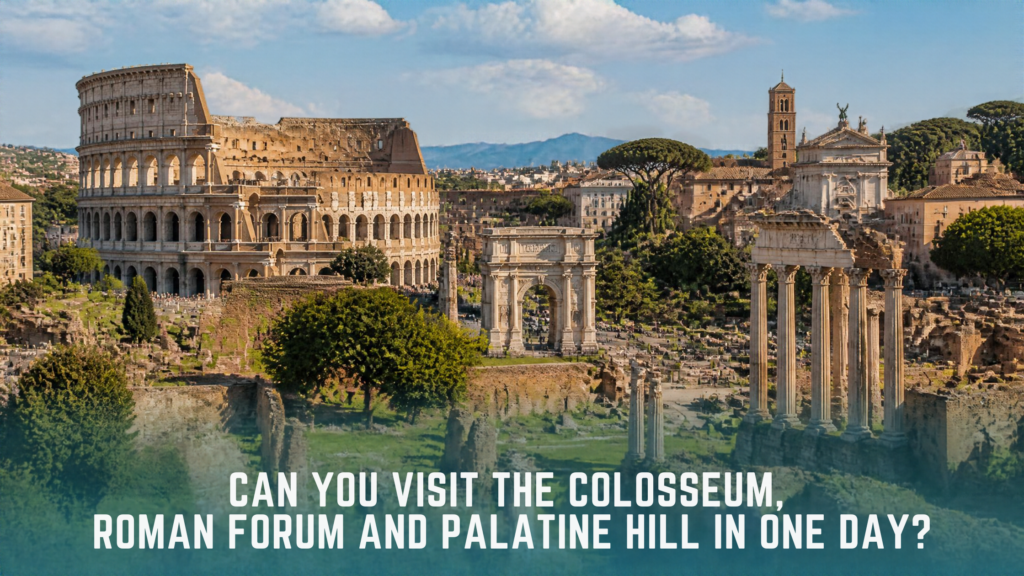
Planning a trip to Rome and wondering if you can visit the Colosseum, Roman Forum and Palatine Hill in a single day? The good news is that yes, you can explore all three ancient Roman landmarks in one day with the right itinerary.
These three archaeological sites are among the most fascinating places to visit in Rome. From the iconic Colosseum, where gladiators once fought, to the ruins of the Roman Forum and the panoramic views from Palatine Hill, each location offers a different perspective on the history of ancient Rome.
However, visiting all three requires some planning. You will need to consider ticket availability, entry times, walking distances and how much time you want to spend exploring each site.
In this guide, we will explain how long to allow for each attraction, the best order to visit them, and whether a guided tour is worth considering.
How Long Does It Take to Visit All Three Sites?
If you want to visit the Colosseum, Roman Forum and Palatine Hill in one day, we recommend allowing approximately four to five hours for a comfortable visit. You may need more time if you enjoy history, photography or exploring archaeological sites at a slower pace.
Here is a suggested time breakdown:
- Colosseum: 1–1.5 hours. Explore the famous amphitheatre and discover how it was used for gladiatorial contests and public spectacles.
- Roman Forum: 1–1.5 hours. Walk among the remains of ancient temples, basilicas and public spaces that once formed the centre of Roman political and social life.
- Palatine Hill: 1–1.5 hours. Discover ancient imperial residences, archaeological remains and viewpoints overlooking the Roman Forum.
These estimates are for planning purposes and do not include every possible queue, break or special-access experience. Your actual visit may take longer depending on your ticket, entry arrangements and interests.
If you have a full day available, you can take your time, stop for photographs and enjoy the experience without rushing from one monument to another.
1. Start Your Day at the Colosseum
The Colosseum is one of the most recognisable landmarks in the world and a must-see attraction for many first-time visitors to Rome.
Built during the Roman Empire, this enormous amphitheatre hosted gladiatorial contests, animal hunts and other public spectacles. Today, visitors can explore designated areas of the monument and learn how it functioned as a major entertainment venue in ancient Roman society.
During your visit, you can admire the architecture, look across the ancient arena and discover the stories behind the people who once stood inside it. Access to areas such as the arena floor or underground depends on the specific ticket or tour booked.
Travel tip: Choose your Colosseum entry time carefully. A timed reservation helps you organise the rest of your day, particularly if you plan to explore the Roman Forum and Palatine Hill afterwards.
Want to explore with a guide? Visit Mister Tour’s Colosseum tours in Rome to discover available guided experiences and find an option that suits your itinerary.
2. Continue to the Roman Forum
After visiting the Colosseum, continue to the Roman Forum, one of the most important archaeological areas of ancient Rome.
The Forum was once the centre of public life in the city. Political discussions, religious ceremonies, commercial activities and public gatherings took place among its temples, basilicas and civic buildings.
As you walk through the ruins, you will encounter the remains of structures that played important roles in the development of Roman civilisation.
Some highlights include the remains of ancient temples, the area around the Via Sacra and the ruins of buildings associated with Roman political and public life.
Unlike the Colosseum, where the main structure is immediately recognisable, the Roman Forum is a large archaeological area that rewards visitors who take time to understand what they are seeing.
A guide can help bring these ruins to life by explaining the purpose of the buildings and how the Forum changed throughout Roman history.
Travel tip: Wear comfortable walking shoes. The paths can be uneven, and exploring the Forum involves more walking than you might expect.
3. Finish at Palatine Hill
Palatine Hill is the third part of your ancient Rome itinerary and an excellent place to continue your exploration.
According to Roman tradition, this hill is associated with the origins of Rome. It later became an important residential area for emperors, whose palaces overlooked the surrounding city.
Today, Palatine Hill features archaeological remains, ancient palace complexes and scenic viewpoints overlooking the Roman Forum.
The elevated setting also offers a different perspective on the archaeological area. If you enjoy photography, allow time to appreciate the views and explore the paths at a comfortable pace.
Depending on your ticket and the available access arrangements, you may be able to explore several archaeological areas during the same visit.
Travel tip: Save some energy for Palatine Hill. The terrain includes slopes and uneven surfaces, so it is worth avoiding an overly rushed itinerary.
What Is the Best Order to Visit the Colosseum, Roman Forum and Palatine Hill?
For many first-time visitors, starting at the Colosseum and continuing to the Roman Forum and Palatine Hill is a practical option.
Here is a sample itinerary:
| Suggested time | Activity |
|---|---|
| 9:00–10:30 AM | Visit the Colosseum |
| 10:30 AM–12:00 PM | Explore the Roman Forum |
| 12:00–1:00 PM | Explore Palatine Hill |
| 1:00 PM onwards | Take a break, have lunch or continue sightseeing |
This is only an example. Actual entry times, walking routes, ticket conditions and opening hours may require you to adjust the schedule. Always allow enough time for security procedures and movement between areas.
If you prefer a slower visit, consider starting earlier when possible or dedicating a larger part of your day to the archaeological area.
Is a Guided Colosseum Tour Worth It?
You can visit the Colosseum, Roman Forum and Palatine Hill independently, but a guided tour can make the experience more informative and easier to organise.
These archaeological sites contain centuries of history, and not every ruin has an obvious explanation. A knowledgeable guide can help you understand the significance of the monuments, the lives of ancient Romans and the events that shaped the city.
Here are some reasons to consider a guided experience:
- Historical context: Learn about gladiators, emperors, Roman politics and everyday life.
- A structured itinerary: Follow a planned route instead of deciding where to go at every turn.
- A more engaging experience: Hear stories and explanations that help you imagine what ancient Rome looked like.
- Less planning stress: Have clearer information about the meeting point, itinerary and tour arrangements before your visit.
If you are visiting Rome for the first time, a guided tour may be especially worthwhile.
Explore Colosseum tours with Mister Tour to compare the available experiences and check which attractions and areas are included.
You can also discover the Colosseum Highlights Rome Walking Tour on GetYourGuide. Review the listing carefully to confirm the itinerary, inclusions and access arrangements before booking.
Remember that not every Colosseum tour includes the same areas or offers the same type of access. Always check the specific tour description before making your reservation.
Can You Visit the Vatican Museums on the Same Day?
If you are spending only one or two days in Rome, you may be tempted to combine the Colosseum with the Vatican Museums and Sistine Chapel on the same day.
Although this may be possible with a carefully planned schedule, it can make for a long and tiring day.
The Vatican Museums contain extensive collections of art and historical treasures, while the Colosseum archaeological area involves considerable walking. You will also need to allow time to travel between the Vatican and the Colosseum area, attend your timed entries and pass through security procedures.
If you have two days in Rome, a more comfortable itinerary is to dedicate one day to the Vatican Museums and another to the Colosseum, Roman Forum and Palatine Hill.
This approach gives you more time to appreciate each attraction instead of rushing through the highlights.
If you have only one day available, prioritise the attractions that matter most to you and check the entry times before making reservations.
What Should You Bring for Your Visit?
A little preparation can make your visit to the archaeological area much more comfortable.
Wear comfortable shoes
Expect to walk across uneven surfaces, ancient paving and sloping paths. Comfortable footwear is essential for exploring all three sites.
Bring water and sun protection
Some areas have limited shade, particularly during warmer months. Bring water, wear a hat when appropriate and apply sunscreen.
Check your ticket requirements
Confirm your entry time, ticket validity, meeting point and identification requirements before leaving your accommodation.
Plan for breaks
If you are travelling with children, older family members or anyone who needs a slower pace, allow additional time for rest and refreshments.
Keep your schedule flexible
Unexpected queues, temporary access restrictions or changes to your plans can affect your itinerary. Avoid booking activities too close together.
Before your visit, check the latest official information for opening hours, ticket conditions and access restrictions.
Should You Book Your Colosseum Tickets in Advance?
Booking in advance is a sensible option, especially if you have fixed travel dates or want to join a guided tour.
The Colosseum uses timed-entry tickets, and availability can vary depending on the date, time and type of experience. Special-access areas may have separate ticket requirements and limited availability.
Before booking, check:
- Whether the ticket covers the Colosseum, Roman Forum and Palatine Hill.
- The validity period and entry conditions.
- Whether a guided tour is included.
- Whether the arena floor or underground areas are included, if these are important to you.
- The meeting point, cancellation terms and tour duration.
If you prefer a guided experience, compare the itinerary and inclusions before selecting a tour.
You can start by exploring Mister Tour’s Colosseum tours or checking the Colosseum Highlights Rome Walking Tour on GetYourGuide.
Frequently Asked Questions
Can you visit the Colosseum, Roman Forum and Palatine Hill with one ticket?
Many standard admission options cover all three archaeological sites, but ticket types, validity periods and access conditions differ. Check the terms of your chosen ticket before booking, especially if you want access to special areas.
Is three hours enough to visit all three sites?
Three hours may be enough for a relatively quick visit, but it can feel rushed. Allowing four to five hours gives many visitors more time to explore, depending on their interests and the areas included in their ticket.
Which site should you visit first?
Starting at the Colosseum is a practical option for many visitors, particularly if they have a timed entry reservation. You can then continue to the Roman Forum and Palatine Hill, adjusting the route to match your ticket and access arrangements.
Are the sites suitable for children?
Families regularly visit the archaeological area with children. However, the amount of walking, uneven ground and limited shade in some areas can be challenging for younger visitors. Plan breaks and choose a pace that suits your family.
Can you visit all three sites without a guide?
Yes. You can explore independently with an appropriate ticket. A guided tour is optional, but it can provide useful historical context and help you understand the significance of the monuments.
Can you visit the Vatican Museums and Colosseum in one day?
It may be possible, but it requires careful scheduling and can be tiring. If you have enough time in Rome, visiting the Vatican Museums on one day and the Colosseum archaeological area on another is generally a more relaxed option.
Make the Most of Your Visit to Ancient Rome
The Colosseum, Roman Forum and Palatine Hill can all be visited in one day, making them an excellent itinerary for travellers who want to discover the history of ancient Rome.
The key is to plan your entry time, allow enough time for walking and exploration, and choose the type of experience that best suits your interests.
Whether you prefer to explore independently or learn from a guide, these three remarkable sites offer an unforgettable look at the city that shaped so much of Western history.
Ready to discover ancient Rome?
Explore Mister Tour’s Colosseum tours to find an experience that suits your visit. You can also check the Colosseum Highlights Rome Walking Tour on GetYourGuide and review the details before booking.
Plan ahead, wear comfortable shoes and get ready to discover the extraordinary history of ancient Rome.